
TRI-BITU JOINT | Polymer-Modified Bituminous Sealant for Concrete Joints
TRI-BITU JOINT is a specialized concrete joint sealant based on polymer-modified bitumen. It is applied manually after heating until it reaches the appropriate consistency for shaping and application. It is suitable for joints with limited movement and expansion joints in concrete structures, including structures exposed to water and weathering.
Category: Joint Sealing Materials – Bituminous Joint Fillers and Sealants
Brand: TRI-CHEM
Product Information
Product Description
TRI-BITU JOINT by TRI-CHEM is a specialized concrete joint sealant based on polymer-modified bitumen. It is applied manually after heating until it reaches the appropriate consistency for shaping and application.
The product effectively fills and seals joints and is suitable for joints with limited movement and expansion joints in concrete structures, including retaining walls, basements, and structures exposed to water.
TRI-BITU JOINT offers good resistance to weathering and can be used in joints exposed to water immersion, making it suitable for various infrastructure, water-retaining structure, and wastewater applications.
Applications of TRI-BITU JOINT
TRI-BITU JOINT is used for sealing joints in various concrete structures and engineering projects, including:
- Joints in Water-Retaining Structures: Sealing joints in concrete structures designed to contain water.
- Concrete Floors: Filling and sealing joints in concrete floors and structures.
- Basements and Below-Grade Structures: Sealing joints in underground structures to help prevent water leakage through them.
- Retaining Walls: Sealing joints in concrete retaining walls.
- Tunnels and Metro Tunnels: Sealing joints in underground concrete structures.
- Wastewater Treatment and Drainage Facilities: Filling joints in structures associated with wastewater treatment and drainage systems.
- Irrigation Channels: Sealing joints in concrete channels and structures designed to convey water.
- Marine Structures and Barriers: Sealing joints in concrete structures exposed to water and outdoor weather conditions.
Advantages of TRI-BITU JOINT
TRI-BITU JOINT offers several properties that make it suitable for concrete joint sealing and infrastructure applications:
- Polymer-Modified Bituminous Formulation: Designed for sealing joints in concrete structures.
- Hand-Applied Material: Applied manually after heating to achieve the appropriate consistency.
- Suitable for Joints with Limited Movement: Can be used for sealing joints with limited movement, including certain expansion joints.
- Water Immersion Resistance: Suitable for water immersion applications within its specified uses.
- Resistance to Sagging: Offers good resistance to sagging after application.
- Weather Resistance: Provides durability and resistance to weathering.
- Joint Width Compatibility: Suitable for sealing joints up to 40 mm wide.
- Infrastructure Applications: Suitable for use in concrete structures, water-retaining structures, and infrastructure projects.
TRI-BITU JOINT Consumption Rate
The consumption rate of TRI-BITU JOINT depends on the joint dimensions, primarily its width, depth, and length, as well as the amount of material required to fill the cavity completely.
There is no fixed consumption rate per square meter. The required quantity is estimated according to the dimensions of the joints in the project.
The required product quantity can be determined by measuring the joints and calculating the volume of material needed to fill them. The use of a backing rod should also be considered to control the application depth and reduce material consumption.
Technical Specifications of TRI-BITU JOINT
The following table presents the main technical properties of the product according to the manufacturer's technical data sheet, at a temperature of 25°C unless otherwise specified.
| Technical Property | Value |
|---|---|
| Material Type | Polymer-Modified Bitumen |
| Application Method | Hand-Applied After Heating |
| Penetration at 25°C | 70–90 dmm |
| Application Temperature Range | +5 to +50°C |
| Movement Accommodation | 10% |
| Specific Gravity | 1.5 ± 0.05 kg/L |
| Initial Setting Time | 24 hours |
| Heating Temperature | 20–70°C |
| Maximum Joint Width | 40 mm |
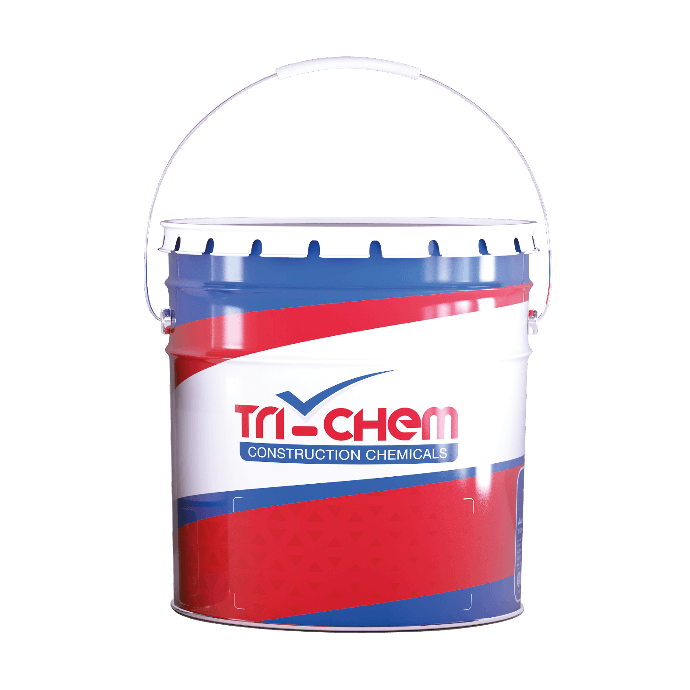
| Available Packaging | 25 kg |
| Shelf Life | 24 months |
Technical values are based on the manufacturer's technical data sheet. Application conditions, joint preparation, heating, and installation must follow the approved product instructions.
Application Instructions for TRI-BITU JOINT
Applying TRI-BITU JOINT requires proper joint preparation and heating the material before use. Ensure that the joint is completely filled and that the sealant makes good contact with the joint sides and base.
1. Joint Preparation
- Joint surfaces must be dry, clean, and free from frost.
- Remove dust and cement laitance using a wire brush, grinding, or sandblasting.
- Rust, scale, and old protective coatings must be removed from metal surfaces.
- Use a closed-cell polyethylene backing rod to control the joint depth and determine the sealant application depth.
- The backing rod diameter must be at least 25% greater than the joint width to ensure that it remains securely in place during joint movement.
2. Primer Preparation
According to the technical data sheet, a primer is required for porous surfaces to prepare them before applying the sealant.
- Apply a thin primer coat using a clean, dry brush, ensuring complete surface coverage.
- Apply the sealant while the primer is still tacky.
- Primer is generally not required for non-porous surfaces, except for glass and glazed surfaces subject to continuous water immersion.
- Iron and steel surfaces must be protected with an anti-corrosion primer before joint sealing.
3. Heating the Material
TRI-BITU JOINT must be heated until it becomes soft and easy to shape and apply.
- The heating temperature specified in the technical data sheet ranges from 20 to 70°C.
- The material can be heated in a dedicated on-site oven or using a boiling water bath.
- Continue heating until the material becomes soft and reaches a workable consistency.
- Direct heating with an open flame or any other direct heat source is strictly prohibited.
4. Application of the Joint Sealant
- Take an appropriate quantity of the material after heating.
- Shape it manually into a strip that matches the joint dimensions.
- Press the material firmly into the joint cavity until all voids are completely filled.
- Ensure good contact between the material and the joint sides and base.
- A hot knife can be used to trim excess material and achieve a uniform finished surface.
5. Cleaning Tools and Equipment
Clean application tools and equipment immediately after use with thinner or white spirit, while observing the relevant safety precautions for flammable materials.
Storage and Shelf Life
- The product has a shelf life of 24 months under suitable storage conditions.
- Store in a cool, dry, and covered area.
- Store containers at temperatures ranging from 5 to 35°C.
- Protect containers from direct sunlight and sources of heat.
- Keep containers away from ignition sources and open flames.
Safety Precautions
TRI-BITU JOINT and the cleaning materials used with it, such as white spirit, contain flammable substances. Therefore, appropriate safety precautions must be followed during heating, application, and cleaning.
- Do not expose the product or cleaning materials to open flames or sources of ignition.
- Ensure adequate ventilation in the working area.
- Avoid inhaling fumes released during heating and application.
- Avoid contact between the product and the skin or eyes, and do not swallow it.
- Wear suitable protective gloves, safety goggles, and other appropriate protective equipment.
- In case of eye contact, rinse immediately with plenty of water and seek medical advice.
Frequently Asked Questions About TRI-BITU JOINT
What is TRI-BITU JOINT?
It is a polymer-modified bituminous joint sealant that requires heating before application until it becomes soft and can be shaped and pressed into concrete joints.
What are the applications of TRI-BITU JOINT?
It is used for sealing joints in concrete structures, water-retaining structures, concrete floors, basements, tunnels, irrigation channels, wastewater facilities, retaining walls, and marine structures.
Can TRI-BITU JOINT be used for expansion joints?
Yes. It can be used to seal joints with limited movement, including certain expansion joints. The movement accommodation specified in the technical data sheet is 10%.
What is the maximum joint width for TRI-BITU JOINT?
The product can be used in joints up to 40 mm wide. Proper joint preparation and the use of a backing rod, where required, are essential.
Is TRI-BITU JOINT suitable for water immersion?
Yes. The technical data sheet specifies that the product is suitable for joints exposed to water immersion, making it applicable to certain water-retaining structures and concrete water-related facilities.
Does TRI-BITU JOINT require heating before application?
Yes. It must be heated until it becomes soft and easy to shape. The specified heating temperature ranges from 20 to 70°C. An on-site oven or water bath can be used. Direct heating with an open flame is prohibited.
What is the consumption rate of TRI-BITU JOINT?
Consumption depends on joint width, depth, and length. The required quantity is calculated according to the volume of the joint to be filled rather than using a fixed consumption rate per square meter.
What is the available packaging size of TRI-BITU JOINT?
The product is supplied in 25 kg containers.
What is the shelf life of TRI-BITU JOINT?
The product has a shelf life of 24 months when stored under suitable conditions at temperatures ranging from 5 to 35°C.
Order TRI-BITU JOINT from Egyptian Contractors
If you are looking for a specialized material for sealing concrete joints in water-retaining structures, basements, irrigation channels, or infrastructure projects, contact Egyptian Contractors to learn more about TRI-BITU JOINT and select the appropriate joint sealant for your project requirements and joint dimensions.